
Trade show booth rental in San Diego
San Diego handles labor in a way that is unusual for a California floor: one exclusive jurisdiction agreement, signed in 2004, covering four separate unions. The rates are coastal, but the boundaries are written down in one place — which means fewer arguments on the floor than venues where they get settled show by show.
- Main venue
- San Diego Convention Center
- Labor
- Exclusive jurisdiction agreement
- Unions covered
- Four, under one agreement
- In place since
- 2004
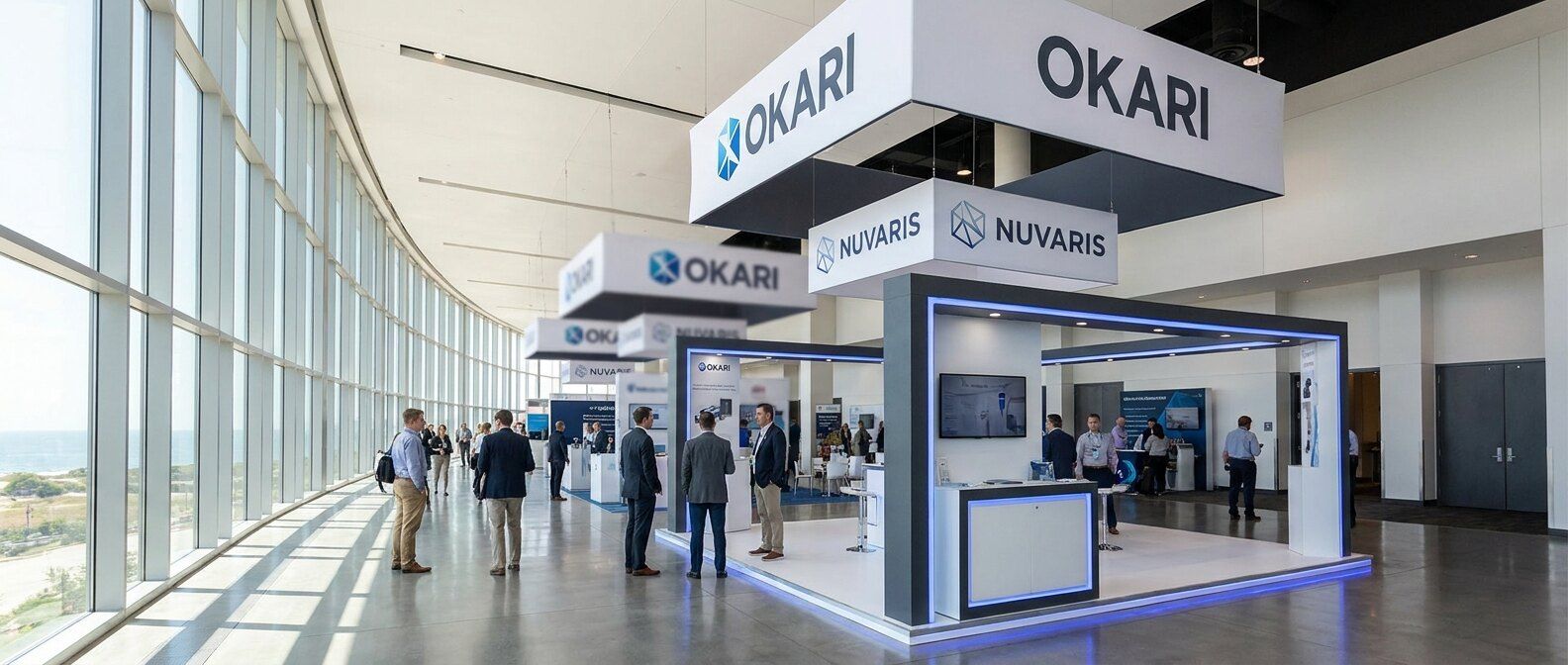
How the jurisdiction agreement works
Four unions sounds like complexity. In practice, having them under a single written agreement makes this one of the more predictable California venues to plan a move-in for.
One agreement, four unions
The convention centre signed an exclusive jurisdiction agreement in 2004 covering four labor partners: IATSE Local 122, IBEW Local 569, the Painters and Allied Trades District Council 36 Tradeshow and Sign Crafts Local 831, and Teamsters Local 542.
What the agreement covers
Move-in, installation, show production, dismantling and move-out of trade shows, convention exhibits, corporate events and theatrical events. In other words, the arc of your show from the dock back to the dock.
What sits outside it
The jurisdiction does not extend to work ordinarily performed by convention centre employees or its own third-party contractors, nor to work done by show management's regular payroll employees who are specifically engaged to do it on a continuing basis.
The upside is predictability
Four unions under one written agreement means fewer jurisdictional arguments on the floor than a venue where the boundaries are negotiated show by show. You are unlikely to be surprised by who is allowed to touch what.
Labor rules are set per event as well as per venue. Everything here is a starting point — the exhibitor kit for your specific show is the document that governs, and your vendor will design and quote against it.
Planning around the city
Coastal California rates
This is not a budget floor. Plan the labor line early and let it shape the booth, in the same way you would in Los Angeles or Anaheim.
One very large event dominates the calendar
San Diego Comic-Con takes over the convention centre and much of the surrounding downtown each summer. If your show lands near it, expect pressure on hotels, labor and local rental inventory.
A compact waterfront campus
The centre sits downtown on the bay with hotels close by, which keeps staff transfers short across a multi-day show — a small but real saving on a large team.
Ask about the specific show's manual
A written jurisdiction agreement sets the venue baseline; your show's exhibitor kit still layers its own rules on top. See what drives the quote.
What moves a San Diego quote
Coastal rates, short regional freight, and one very large annual event that distorts the calendar around it.
Budget as a California venue
San Diego prices with the coastal markets rather than the right-to-work ones. Labor and material handling are the lines that separate it from Dallas or Atlanta, not the hardware.
Clear boundaries reduce waste
Where jurisdictions are ambiguous, move-ins lose time to arguments you are paying crews to have. A single written agreement is worth something real here, even if the hourly rates are not low.
Regional freight is short
If you rent from a Southern California exhibit house, the truck run is short and the vendor can reach the building quickly. Both matter more than they sound.
Watch the summer peak
Around the city's largest events, everything tightens — labor availability, inventory, and the hotel bill for your staff. Book substantially earlier for a show in that window.
Common questions
What is the exclusive jurisdiction agreement at the San Diego Convention Center?
It is a single agreement, in place since 2004, under which four unions — IATSE Local 122, IBEW Local 569, IUPAT District Council 36 Local 831, and Teamsters Local 542 — hold the work of moving in, installing, producing, dismantling and moving out shows at the venue. Having it written in one place makes the boundaries clearer than at venues where they are settled event by event.
Can my own staff work on the booth in San Diego?
Less freely than in a right-to-work market. The jurisdiction agreement covers installation and dismantling broadly, with carve-outs for convention centre staff, its own contractors, and show management's continuing payroll employees. What your company's employees may do is set by your show's exhibitor kit, so read the labor section before assuming.
Is San Diego expensive compared with other cities?
It sits with the other coastal California venues, below San Francisco but meaningfully above right-to-work markets like Dallas, Atlanta and Nashville. The difference shows up in labor and material handling rather than in the cost of the booth itself.
How does Comic-Con affect exhibiting in San Diego?
The city's largest event occupies the convention centre and a large part of downtown for its run, and the effects spill either side of it. If your show falls near that window, book earlier than you normally would — local rental inventory, labor and hotel rooms all get scarce at once.
Should I use a San Diego vendor or one from Los Angeles?
Either can work, since the region is compact and Southern California exhibit houses routinely serve both. The question to ask is how often they install at the San Diego Convention Center specifically — familiarity with the docks and the jurisdiction agreement is worth more than the difference in freight distance.
Anaheim and Los Angeles are the other Southern California floors, each with its own arrangement. For a cheaper install, compare Dallas or see all fifteen by city.