
Trade show booth rental in Orlando
Orlando is the hardest of these cities to give one answer about. The Orange County Convention Center runs a mix of union and non-union labor depending on the event, so the rules that govern your move-in come from your show rather than from the building. On one of the busiest campuses in the country, that makes reading the exhibitor kit early the whole game.
- Main venue
- Orange County Convention Center
- Labor
- Mixed; set show by show
- Outside installers
- EAC registration required
- Venue-controlled
- Electrical and rigging
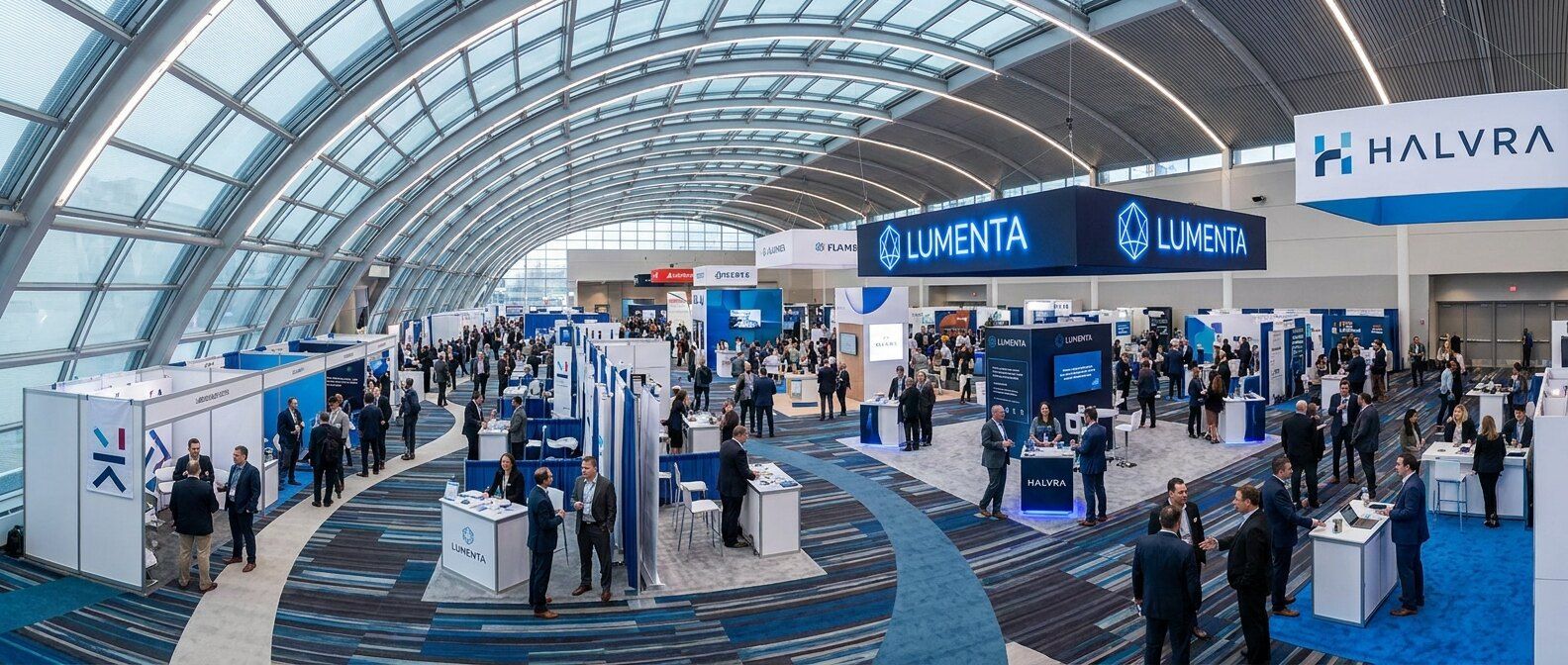
Why the rules vary here
Most cities on this list have a labor posture you can learn once. Orlando does not, and planning as though it does is the common mistake.
The building does not give you one answer
The Orange County Convention Center runs a mix of union and non-union labor depending on the show and the type of work. That makes it the hardest of these cities to generalise about, and the one where reading your own exhibitor kit matters most.
Bringing your own installer means registering them
If you want an exhibitor-appointed contractor rather than the general service contractor's crew, they have to be registered as an EAC, with paperwork and insurance filed against a deadline. Miss it and your installer is not getting on the floor.
Electrical and rigging stay put
Whatever the labor posture of your particular show, electrical and rigging remain controlled. They are ordered through the official channel on their own advance deadline, and floor rates afterwards are punishing.
Read the kit earlier than elsewhere
In a city where the rules genuinely change between events, the exhibitor manual is not boilerplate. Get it as soon as it is published and hand it to your vendor before any design work starts.
Labor rules are set per event as well as per venue. Everything here is a starting point — the exhibitor kit for your specific show is the document that governs, and your vendor will design and quote against it.
Planning around the volume
One of the busiest campuses in the country
More than a million and a half attendees move through the OCCC each year across a very large volume of events. Popular dates put real pressure on local rental inventory and labor availability.
Find out which building
The centre is split across separate buildings connected across the campus. Which one your show occupies changes dock access, move-in routing and how far freight travels internally.
Staffing costs are a factor here
Orlando is a destination city, so flights and hotels for your booth staff are often easier to arrange than in a business-only market — but peak convention weeks still move hotel rates sharply.
Book against the calendar
With this much volume, the constraint is frequently availability rather than price. Start with whether a vendor has your dates free. See what drives the quote.
What moves an Orlando quote
Price matters less here than availability. On a campus this busy, the question is frequently who still has your dates rather than who is cheapest.
Labor lands in the middle
Orlando is generally cheaper than the coastal union halls and dearer than the deepest right-to-work markets, but the spread between shows here is wider than the spread between cities. Your show's labor posture matters more than Florida does.
EAC routes have their own costs
Bringing your own installer can save money on a complex build, but registration, insurance requirements and the general service contractor's own charges eat into it. Price both routes rather than assuming.
Volume pressures inventory
A very busy campus means the good stock configurations get committed early. Late booking here is more likely to cost you through limited choice than through a rush premium.
Order venue services on the deadline
Electrical and rigging are the lines with the sharpest advance-versus-floor difference. This is the easiest money to save and the easiest deadline to miss.
Common questions
Is the Orange County Convention Center union?
Partly, and it depends on the show. The OCCC operates with a mix of union and non-union labor according to the event and the type of work involved, which makes it less predictable than either a firmly union hall or a right-to-work one. The labor jurisdiction section of your show's exhibitor kit is the document that answers this for you.
Can I use my own installer in Orlando?
Often yes, but they must be registered as an exhibitor-appointed contractor. That means paperwork and proof of insurance filed by a deadline ahead of the show. It is a routine process for exhibit houses that work the building regularly, and a common late-stage problem for those that do not.
How early should I book a booth rental in Orlando?
Earlier than the price alone would suggest. The campus runs an unusually high volume of events, so the binding constraint is often whether a vendor still has inventory free for your dates rather than what they will charge. Six to twelve weeks for a linear booth is a floor, not a target, and islands want three to four months.
Which building will my show be in?
The convention centre is split across separate connected buildings, and shows are assigned to one or spread across more than one. It is worth confirming early because it changes dock access, move-in routing, and the internal distance your freight has to travel — all of which show up on the material handling line.
Is Orlando expensive compared with other cities?
It sits in the middle. Labor is typically below Los Angeles and above the deepest right-to-work markets like Dallas. The bigger variable is which show you are in, because the labor posture here changes between events more than it does between Florida and its neighbours.
For predictable labor rules, Dallas and Atlanta are right-to-work and Chicago publishes formal exhibitor rights. See how all fifteen compare by city.