
Trade show booth rental in Phoenix
Phoenix gives exhibitors more room to build their own booth than any other city covered here: no square-footage ceiling, no stopwatch, and a venue that does not require union labor at all. The catches are small and specific — you cannot touch material handling equipment, and your staff should be carrying proof that they work for you.
- Main venue
- Phoenix Convention Center
- Labor
- Right-to-work; union not required
- Exhibitor self-setup
- All exhibit properties, no size cap
- Bring
- Proof of employment
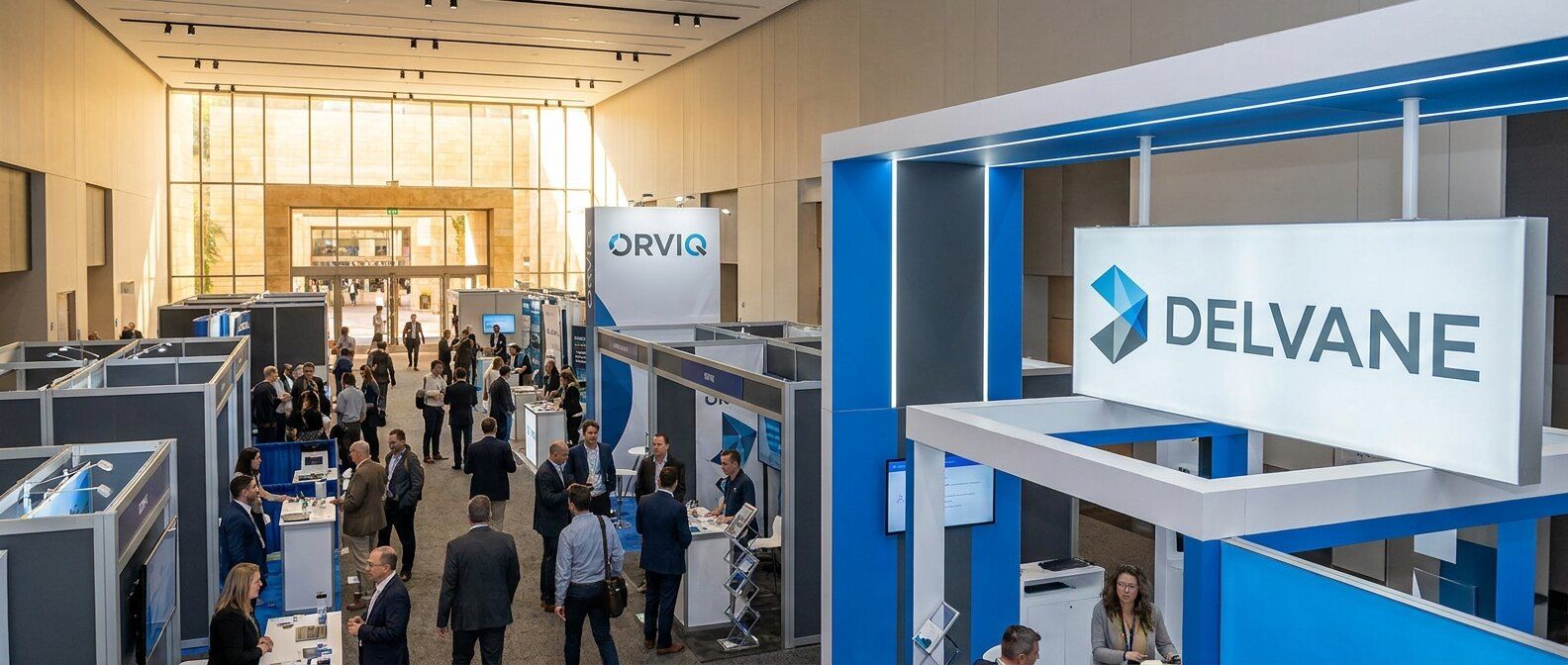
How self-setup works here
The latitude is unusually broad, which makes the boundaries worth knowing precisely. They are about equipment and documentation rather than about the size of your booth.
The venue does not require union labor
Arizona is a right-to-work state and the Phoenix Convention Center does not require the use of union labor. Many local service contractors use it anyway, so a union crew is common on the floor — but the building is not the thing obliging you to order one.
No size cap and no stopwatch
Full-time exhibitor personnel may install and dismantle their own exhibit properties. There is no square-footage ceiling of the kind New York applies and no time limit of the kind Denver and Anaheim apply. On self-setup latitude this is the most permissive floor covered here.
You will be asked to prove it
The latitude is granted to full-time employees, and the way that gets checked is documentation — a payroll stub or company medical card carried on the floor is the commonly cited form. It is a small thing that stops a move-in cold if nobody brought one. Tell your team before they fly.
The limit is equipment, not scope
What exhibitor staff may not do is use material handling equipment. Freight movement in and out, and setting pipe and drape, belong to the stagehand local — Local 36 is the number usually cited. You can build the whole booth and still not move the crate it arrived in.
Electrical has its own thresholds
Wiring under carpet, overhead distribution, motor and equipment hook-ups, hard-wired connections and fixture work all require electrical labor, as do outlets above 20 amps or 150 volts. Pre-wired equipment is subject to inspection. These are trade rules rather than jurisdiction disputes, and they apply regardless of right-to-work status.
Labor rules are set per event as well as per venue. Everything here is a starting point — the exhibitor kit for your specific show is the document that governs, and your vendor will design and quote against it.
Planning a Phoenix move-in
Three buildings, one of them detached
The North and West buildings connect underground through a shared exhibit hall and by a skybridge over Third Street. The South building stands alone. If your show spans buildings, confirm which one your space is in before booking anything, because it changes your dock, your walk and your staffing.
Straight time is a narrow window
The working day commonly cited here runs 8:00 a.m. to 4:30 p.m. Monday to Friday with a half-hour lunch at noon, and anything outside it is overtime. A late move-in slot is therefore an overtime decision rather than an inconvenience.
A large building for the market
Nearly 900,000 square feet of meeting space across 13 exhibit halls, including a 312,500 sq ft main exhibition hall and a 190,000 sq ft virtually column-free upper level. Space is rarely the constraint in Phoenix; the calendar is.
Season matters more than in most cities
Phoenix show season is weighted heavily toward the cooler months, which compresses demand for local labor, hotels and rental inventory into part of the year. Book against that calendar, not against the building's size. See what drives the quote.
What moves a Phoenix quote
Labor is the cheapest on this list and genuinely avoidable on a self-set booth. The cost risk here is the schedule.
The cheapest floor here to stand a booth up on
Broad self-setup latitude and right-to-work labor put Phoenix at or below Dallas, Houston, Atlanta and Nashville, and far below the coastal union halls. If install cost is the deciding factor, this is the floor it decides in favour of.
Self-setup is genuinely available at real sizes
Unlike almost everywhere else on this list, the allowance is not limited by footprint. A competent internal team can remove the install line from a booth large enough for that saving to matter — which is unusual, and worth pricing both ways before you assume.
Drayage does not care that labor is cheap
Material handling is still a labor call, still billed by weight, and still one of the larger lines on the quote. Cheap install labor does not discount the crates.
Watch the clock, not the rate
With a narrow straight-time window, the expensive mistake in Phoenix is scheduling rather than pricing. An install that runs past 4:30 costs more per hour than the same work started earlier in the day.
Common questions
Can my employees set up our own booth in Phoenix?
Yes, and more freely than anywhere else covered here. Arizona is a right-to-work state, the Phoenix Convention Center does not require union labor, and full-time exhibitor personnel may install and dismantle their own exhibit properties with no published size or time limit. The two real constraints are that you cannot use material handling equipment, and that staff should carry proof of employment.
What proof of employment do I need to bring?
A payroll stub or company medical card is the form usually cited. The point is to demonstrate that the people working in the booth are full-time employees of the exhibiting company rather than unbadged outside labor. It costs nothing to bring and it is a genuinely common reason a self-setup plan falls apart on the floor, so brief the team in advance.
Is Phoenix a union city for trade shows?
Not in the sense that Chicago, New York or San Francisco are. Arizona is right-to-work and the venue does not require union labor, though many local service contractors use union crews, and the stagehand local still holds freight movement and pipe and drape. The distinction that matters is that the building is not obliging you to order labor you do not need.
What still needs professional labor in Phoenix?
Anything involving material handling equipment, freight movement in and out of the hall, and pipe and drape. On the electrical side: wiring under carpet, overhead distribution, motor and equipment hook-ups, hard-wired connections, fixture work, and any outlet above 20 amps or 150 volts. Pre-wired equipment may be inspected.
Is Phoenix cheap to exhibit in?
On labor, it is the cheapest floor on this list, and it is the one city here where a competent internal team can realistically remove the install line from a mid-size booth. Material handling, show services and freight behave normally, so the saving is concentrated in install and dismantle rather than spread across the quote.
Nashville runs a similarly broad allowance, and Dallas, Houston and Atlanta are the other right-to-work markets. Miami shows why right-to-work status alone does not predict a floor. All fifteen sit together by city.