
Trade show booth rental in Denver
Denver publishes its labor rules as a single page, and the whole exhibitor question comes down to one number on it: sixty minutes. Your own full-time staff may install and dismantle your display if the work finishes inside the hour and needs no mechanized tools. Everything past that belongs to IATSE Local 7.
- Main venue
- Colorado Convention Center
- Labor
- IATSE Local 7, the whole floor
- Exhibitor self-setup
- Under sixty minutes, no mechanized tools
- Product placement
- Exclusively yours
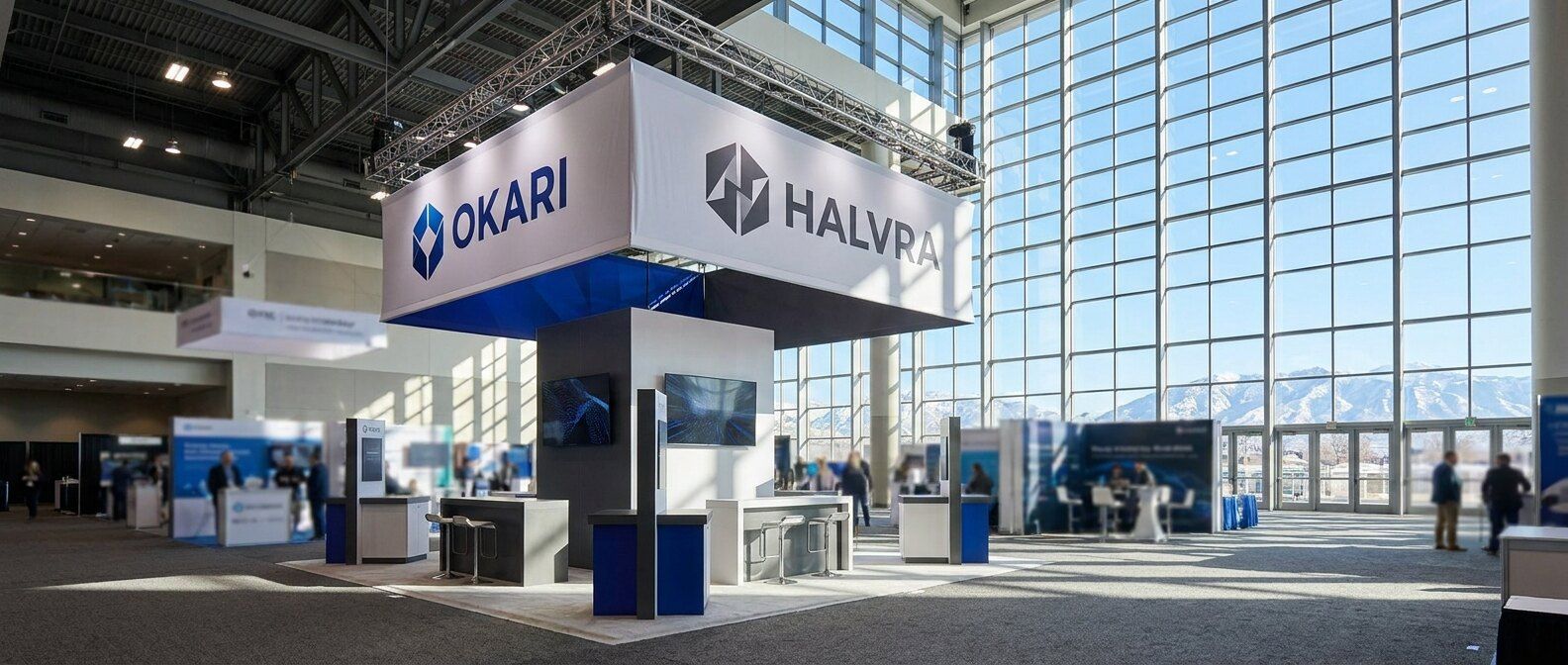
How self-setup works here
The Colorado Convention Center states its conditions in writing rather than leaving them to the contractor, which makes Denver one of the easier floors on this list to plan against. The conditions are narrow, but they are knowable in advance.
One union, the entire floor
Decorating, display, drayage, theatrical, rigging, production, audio visual and all material handling at the Colorado Convention Center are performed by IATSE Local 7. That is simpler than a multi-union floor like San Francisco, where six jurisdictions divide the same work — but it also means there is no second local to appeal to when a call is disputed.
The sixty-minute rule
Full-time employees of an exhibiting firm may install and dismantle their own company display if the work can be completed in less than sixty minutes and without the use of mechanized tools. Both conditions have to hold. It is twice the latitude Anaheim gives you, and it is still a stopwatch.
Mechanized tools, not all tools
The written rule bars mechanized tools rather than tools generally, which is a narrower restriction than the no-tools-at-all exception at the Javits Center. It does not define the term, so a hand tool is uncontroversial and a cordless driver is exactly the sort of thing worth settling with the general service contractor in advance rather than on the floor.
Product display and placement is carved out
The work rules explicitly exclude product display and placement, and name it the exclusive right of full-time employees of the exhibiting firm. Unpacking, arranging and demonstrating your own product is never somebody else's labor call here. Few venues state it that plainly, and it is worth knowing before anyone tells you otherwise.
Hand-carry yes, wheels no
Exhibitors may handle their own hand-carried materials in and out of the building. The moment delivery needs equipment — a dolly counts, not just a forklift — it becomes a Local 7 call arranged through the general service contractor. The line is drawn at equipment, not at weight.
Labor rules are set per event as well as per venue. Everything here is a starting point — the exhibitor kit for your specific show is the document that governs, and your vendor will design and quote against it.
Planning a Denver move-in
Dock space is limited, and not yours to arrange
The venue says so in its own labor document: dock space at the Colorado Convention Center is limited and under the control and authority of the general service contractor. Your move-in window is assigned rather than chosen, and a late slot is how install hours drift into overtime.
Freight goes through the contractor, not the building
The venue does not accept freight deliveries directly from exhibitors. Everything routes through your general service contractor, so the advance warehouse deadline is a real deadline rather than a convenience.
A bigger building than it used to be
A $233 million expansion completed in late 2023 added roughly 200,000 square feet, including an 80,000 sq ft ballroom and a 20,000 sq ft rooftop terrace, on top of around 600,000 square feet of exhibit space. Denver now wins bookings it previously lost, which is good for choice of dates and bad for assuming inventory is idle.
Decide honestly whether the hour is realistic
A crated rental booth above a 10 × 10 rarely goes up in under an hour, even with a practised team. If it will not, plan and price the labor from the start rather than discovering it during move-in. See what drives the quote.
What moves a Denver quote
One threshold does most of the work. Everything else is ordinary middle-of-the-market pricing.
The hour decides whether you have an install line at all
This is the one number that moves a Denver quote. Under sixty minutes with hand tools and the install line can disappear; over it, you are ordering labor like anyone else. Small pop-up and banner-wall configurations genuinely clear the bar. Most crated rentals do not.
Material handling starts at the first dolly
Because equipment use is the trigger rather than weight, anything arriving crated is a drayage conversation regardless of how light it is. Hand-carryable freight is the only freight you handle yourself.
Colorado is not a right-to-work state
Denver sits between the two ends of this list on labor: above Dallas, Houston and Phoenix, below San Francisco and New York. Budget it as a middle market, not a cheap one.
The expansion pulled competition in with it
More and larger shows now book Denver, which tightens local rental inventory around the busy weeks. Book against the calendar rather than the price, particularly for islands.
Common questions
Can my own employees set up our booth at the Colorado Convention Center?
Yes, within two written limits. Full-time employees of the exhibiting firm may install and dismantle their own company display if the work can be completed in less than sixty minutes and without the use of mechanized tools. Anything beyond that goes to the official general service contractor or another contractor signatory to the IATSE Local 7 agreement.
What counts as a mechanized tool in Denver?
The venue's labor document does not define it, which is exactly why it is worth asking. A screwdriver or an allen key is uncontroversial. A cordless drill is the common argument, and the answer you get can depend on the show and the contractor. Settle it with your general service contractor before move-in rather than with a steward on the floor.
Can I carry my own materials into the hall?
Hand-carried materials, yes — exhibitors may bring them in and out themselves. Anything that needs equipment to move, including a dolly rather than just a forklift, is handled by labor through IATSE Local 7 and arranged through the general service contractor. The test is whether equipment is involved, not how heavy the load is.
Who can place our product in the booth?
You can, always. Product display and placement is explicitly excluded from the Denver work rules and named as the exclusive right of full-time employees of the exhibiting firm. The sixty-minute limit applies to installing and dismantling the display itself, not to arranging what goes in it.
Is Denver expensive to exhibit in?
It lands in the middle. Colorado is not a right-to-work state, so labor costs more than Dallas or Phoenix, but it is well short of New York or San Francisco. Denver is also reachable overland from both coasts, which keeps freight more reasonable than either coastal extreme.
Anaheim runs the same kind of rule at half the time, and New York replaces the clock with a size cap and a tools ban. For the opposite posture entirely, Phoenix sets no limit on exhibitor self-setup at all. All fifteen sit together by city.