
Booth rental, city by city
The same booth costs different amounts in different halls, and almost none of that difference is the booth. It is labor rules, material handling rates, and who is allowed to sell you electricity. These guides cover what actually changes, venue by venue.
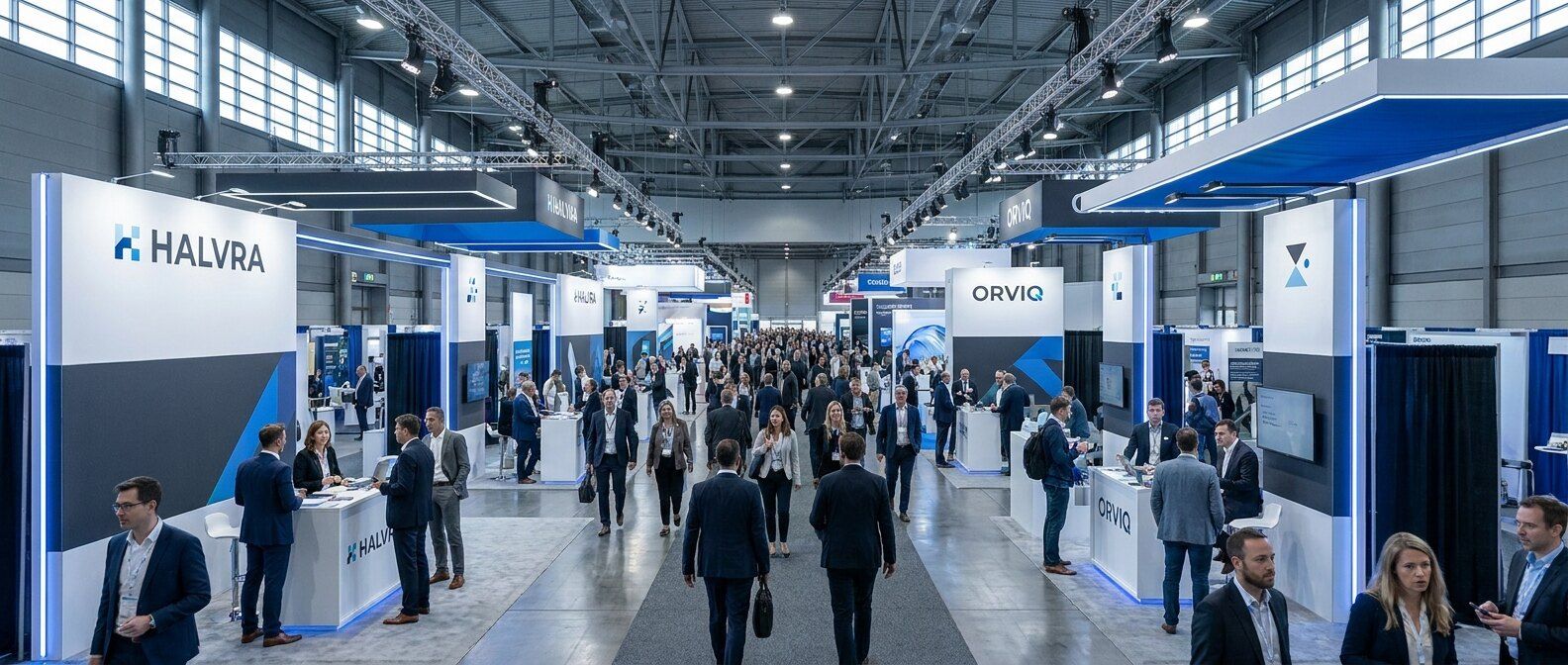
Fifteen cities
Anaheim Convention Center
Anaheim
Union, with a half-hour threshold
Southern California's other major floor, and a venue with an unusually literal rule: if the work takes longer than half an hour, it stops being yours to do. Renting in Anaheim
Georgia World Congress Center
Atlanta
Right-to-work; wide self-setup latitude
Georgia is right-to-work, so labor calls are shorter than the coastal union halls. The venue controls its own services, and ordering them early carries a published discount. Renting in Atlanta
McCormick Place
Chicago
Union, but a published Exhibitor Bill of Rights
The largest convention center in North America, and more permissive on exhibitor self-setup than its reputation suggests — the rights are written down and worth reading. Renting in Chicago
Huntington Convention Center
Cleveland
Not right-to-work, yet plainly permissive
Ohio has no right-to-work law and the venue grants self-setup in one unqualified sentence anyway — good evidence that a state statute is a poor guide to a show floor. Renting in Cleveland
Kay Bailey Hutchison Convention Center
Dallas
Right-to-work; among the cheapest labor here
Texas right-to-work rules mean shorter labor calls and lower material handling than coastal venues. Among the least expensive cities on this list to install in. Renting in Dallas
Colorado Convention Center
Denver
Union, with a published sixty-minute rule
One union holds the whole floor, and the exhibitor exception is written down and timed: under an hour, no mechanized tools. Placing your own product is always yours. Renting in Denver
George R. Brown Convention Center
Houston
Right-to-work; facility trades hold the utilities
Texas rules again, on a floor built for industrial and energy shows. Heavy machinery, vehicles and multilevel booths are routine here, and each carries its own permit. Renting in Houston
Los Angeles Convention Center
Los Angeles
Two unions split the work
Exhibit work and freight fall to different unions, so who may touch what is unusually specific here. Coastal labor rates, and a California licensing wrinkle for contractors. Renting in Los Angeles
Miami Beach Convention Center
Miami
Right-to-work state, union venue
Florida law says one thing and the building says another. It holds IATSE and IBEW agreements, and your booth-work scope is settled by conversation rather than a published cap. Renting in Miami
Music City Center
Nashville
Right-to-work; staff may set their own exhibits
A fast-growing show market with one of the clearest self-setup rules anywhere: your own full-time employees may build your exhibit without calling the stagehand union at all. Renting in Nashville
Jacob K. Javits Convention Center
New York
Union, with narrow written exceptions
The tightest floor on this list, but not a closed one. The exceptions are written down and precise, and they hinge on two numbers: 250 square feet, and no tools. Renting in New York
Orange County Convention Center
Orlando
Mixed; varies by show
One of the busiest campuses in the country, and the hardest on this list to generalise about — the labor posture is set show by show rather than by the building. Renting in Orlando
Phoenix Convention Center
Phoenix
Right-to-work; union labor not required
The most permissive floor here on self-setup: no size cap, no stopwatch. The limits are material handling equipment, which is not yours to touch, and proving your staff work for you. Renting in Phoenix
San Diego Convention Center
San Diego
Four unions under one agreement
The venue signed a single exclusive jurisdiction agreement covering four separate unions, which makes who does what unusually well defined for a California floor. Renting in San Diego
Moscone Center
San Francisco
Six jurisdictions; the venue declines to referee
Six unions divide the work, and the building states outright that it does not enforce jurisdictional claims or set labor rates. One of the two priciest floors on this list. Renting in San Francisco
What actually changes between cities
Hardware and graphics travel well — you are renting similar structure and printing the same artwork wherever the show is. These are the lines that move.
Labor rules, by far the most
Whether your own staff may build your booth, and how long a labor call runs, changes more between cities than any other factor. A right-to-work state like Arizona or Texas gives you latitude that a six-union floor like San Francisco does not, and the gap lands directly on the install and dismantle lines. Read the building rather than the statute, though — Miami and Cleveland each behave the opposite way to their state law.
Material handling rates
Drayage is billed by weight, but the rate per hundredweight is set locally and varies sharply. Big-hall venues also move your crates further inside the building, which is work you pay for whether or not you ever see it happen.
Who sells you the services
Electrical, rigging and internet come from the show's official contractor in most cities, but some venues sell their own — which changes who you order from, which deadline applies, and whether a single early-order discount covers several lines at once.
How far your freight travels
A vendor near the venue ships a shorter distance and can reach the hall if something arrives damaged. Central cities shorten the run from most origins; coastal ones lengthen it from everywhere but their own region.
Everything in these guides is a starting point. Labor rules are set per event as well as per venue, so the exhibitor kit for your specific show is always the document that governs.
Common questions
Does the city really change what a booth rental costs?
Substantially, yes — but not evenly across the quote. Hardware and graphics barely move, because you are renting the same kind of structure and printing the same artwork wherever you go. Labor, material handling and show services are what shift, and between a right-to-work market and a coastal union floor the difference on those lines can be large.
Which city is cheapest to exhibit in?
Of the fifteen covered here, the right-to-work markets are the most affordable — Phoenix, Dallas, Houston, Atlanta and Nashville all have shorter labor calls and more exhibitor self-setup latitude, and Phoenix is the most permissive floor of the lot. New York and San Francisco are the two most expensive, with the other California venues behind them. Chicago is a union market but publishes unusually broad exhibitor rights, which can offset it on smaller booths.
Should I hire a vendor local to the venue?
Usually. The freight saving is real, but the better argument is proximity: a local exhibit house knows the building's dock behaviour and labor rules, and can put a person on site within the hour if something goes wrong. Those are exactly the problems that turn into surprise line items when nobody can reach the hall.
Do right-to-work states mean there are no unions at the show?
No, and it is a less reliable signal than it looks. It means your own full-time employees generally have more scope to work on your own exhibit, and that labor calls tend to be shorter. But unions still hold jurisdictions, the general service contractor still runs the floor, and motorised equipment remains a labor call everywhere. Two cities here break the pattern outright: Miami is in a right-to-work state yet the venue holds union agreements, while Cleveland is in a state without right-to-work law yet grants self-setup in one plain sentence.
Where do I find the actual rules for my show?
The exhibitor kit, sometimes called the exhibitor service manual, published by show management. It is the governing document, it is show-specific rather than venue-specific, and it contains the labor jurisdiction section and every advance-order deadline. Get it as soon as it is out and hand it to your vendor before design starts.
Once you know the city, the footprint is the other half of the quote. The eight standard sizes are compared to scale, and the cost guide breaks a quote into the six lines every vendor should give you.